Personal Chef
Corporate Chef vs Corporate Catering: Which Is Right for Your Event?
Posted by Platesfull Team on 16-Jun-2026
You have a company offsite coming up. Or a client dinner. Or a team milestone worth celebrating. And someone on the planning committee asked the question that always comes up: "Should we just get catering, or do we hire a chef?"
It sounds like a simple question. But the answer depends on what kind of experience you actually want to create — and what impression you want to leave on the people in that room.
This guide breaks down the difference between a corporate chef and corporate catering, when each one makes sense, and how to decide which is right for your next event.
What Is a Corporate Chef?
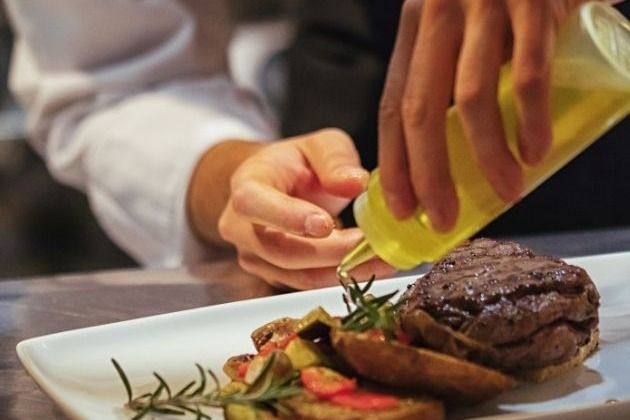
A corporate chef — sometimes called a private chef for corporate events — is a culinary professional hired specifically for your company's event. They come to your venue, whether that's your office, an offsite retreat, a private dining room, or a client's home, and they cook fresh for your group on-site.
Unlike a restaurant or a catering company, a corporate chef works exclusively for you during that engagement. They develop a menu around your guests, their dietary needs, your event format, and the experience you want to create. The food is cooked and served the day of the event, not prepped in a commercial kitchen and transported in aluminum trays.
Corporate chefs are commonly used for:
- Executive dinners and client entertainment
- Company offsites and leadership retreats
- Team celebrations and milestone events
- Board dinners and investor meetings
- Employee appreciation events
What Is Corporate Catering?
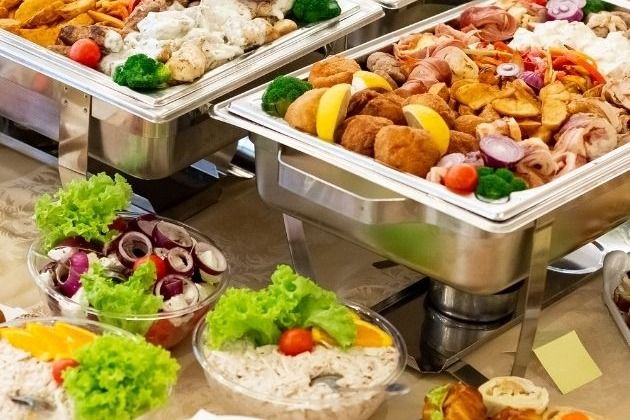
Corporate catering is a food service model where a catering company prepares food in bulk at a central kitchen and delivers it to your event location. The food is typically transported in warming trays or chafing dishes, set up in a buffet or drop-off format, and either self-served or staffed by the catering team.
Catering is well-suited to large-scale feeding situations where speed, volume, and consistency matter more than personalization. Think company-wide all-hands lunches, conference breaks, or multi-day events where feeding 100 or more people efficiently is the priority.
Corporate catering is commonly used for:
- Large office lunches or all-hands meetings
- Multi-day conferences and seminars
- Training days with 50+ attendees
- Drop-off meals for large teams
The Core Differences
| Corporate Chef | Corporate Catering | |
|---|---|---|
| Food quality | Fresh, cooked on-site day-of | Prepped in advance, reheated |
| Personalization | High — menu built around your group | Low — set menu packages |
| Dietary accommodation | Handled individually | Often limited |
| Group size | Best for 6–50 guests | Best for 50–500+ guests |
| Experience feel | Intimate, premium, memorable | Functional, efficient |
| Setup | Chef works in your kitchen or on-site | Delivery, setup, and break-down by caterer |
| Ideal for | Executive dinners, offsites, client events | Large company lunches, conferences |
| Confidentiality | High — one dedicated professional | Lower — larger crew on-site |
| Cost structure | Per-event, often per-guest pricing | Per-head pricing, bulk discounts |
When a Corporate Chef Is the Right Choice
1. Executive Dinners and Client Entertainment
When the people in the room matter most, the experience has to match. A client dinner for five key decision-makers, a dinner for a prospective investor, or a board dinner where you're building a relationship over a meal — these are situations where catering simply does not create the right environment.
A corporate chef brings a restaurant-quality experience into a private setting. There are no other tables, no noise, no waiting for a server to come back. The food comes out at the right moment, course by course, and the chef can remain largely invisible or engage with guests if the group prefers that energy.
The level of care shows. And in business, how you host someone communicates something about how you operate.
2. Company Offsites and Leadership Retreats
Offsites are increasingly treated as high-value investments in team cohesion. Companies spend significant budget getting people to the right location, in the right mindset, away from day-to-day noise. The meals at an offsite should not be the afterthought.
A corporate chef hired for an offsite handles all the meals during the retreat — breakfast, lunch, dinner — freeing your leadership team to focus on the agenda rather than coordinating food logistics. The food becomes a part of the culture of the retreat, not a logistical inconvenience.
This is especially true for multi-day leadership offsites at a private ranch, lake house, or retreat property where there is no nearby restaurant that can handle a group of 15–25 people comfortably.
3. Team Building Events
Hiring a chef as the centerpiece of a team event has become one of the most effective formats for company team building — particularly for groups that are remote, newly formed, or returning from a period of distributed work.
A cooking experience led by a skilled chef creates shared activity, light competition, and genuine conversation that does not happen in a standard meeting room. Teams that cook together tend to connect differently than teams that simply eat together.
4. Small Group Milestone Celebrations
A team of 12 who just closed a major deal. A department that hit an annual goal. A founder celebrating a company anniversary with their earliest employees. These are moments that deserve more than a pizza order or a catered buffet.
A corporate chef for 10–20 people creates a dinner that feels like a genuine celebration — not a catered obligation. The food is part of the memory, and the intimacy of the setting lets people actually connect.
5. Events Requiring Confidentiality
This is an underappreciated factor. When you bring in a catering team, you often have 4–8 people on-site who are not part of your company. For most events this is fine. But for board meetings, investor discussions, M&A-adjacent gatherings, or senior leadership conversations, having a large crew circulating through the space is not ideal.
A single corporate chef, by contrast, is one professional who can sign an NDA if needed and operates with discretion. Many corporate clients specifically request Platesfull chefs for sensitive events for exactly this reason.
When Corporate Catering Makes More Sense
There are situations where catering is genuinely the better choice, and being honest about that matters.
Large group sizes. If you need to feed 75, 150, or 300 people, a private chef is not the right model. Catering companies are built for scale and volume. A corporate chef working with a small team has a natural ceiling on how many guests they can serve with the quality and timing that makes the experience worthwhile.
Drop-off lunch situations. If the goal is simply getting food to the office for a working lunch, a training day, or a team meeting, catering handles this efficiently and affordably. There is no reason to hire a corporate chef for a scenario where people are eating between agenda items.
Recurring weekly meals. Some companies provide weekly team lunches as a benefit. At scale and frequency, a catering subscription model makes far more financial sense than a per-event chef.
Tight turnaround with large headcount. If you need 80 people fed in 30 minutes at a company event, catering is built for that. Speed and volume are where catering shines.
Cost Comparison: Corporate Chef vs Corporate Catering
Cost is usually the first question, but the comparison is less straightforward than most people expect.
Corporate catering typically runs $25–$75 per person for standard drop-off or buffet service, and $75–$150 per person for staffed, higher-end corporate catering. For a group of 20 people, a mid-range corporate catering experience might cost $1,500–$3,000.
A corporate chef for the same group of 20 people typically starts around $90–$150 per person for a multi-course dinner experience, including the chef's time, on-site cooking, and service. That puts the range at approximately $1,800–$3,000 for a group of 20 — comparable to mid-to-high corporate catering when you factor in the full picture.
What you get for that price is meaningfully different. With a corporate chef, you get fresh food cooked on-site, complete dietary customization, an intimate experience, and a level of quality that is difficult to replicate from a catering company serving 12 events on the same Saturday.
For executive-level events, the cost per impression — meaning what each guest walks away feeling about the company — is actually lower with a private chef than with catering, because the experience lands differently.
How to Decide: A Simple Framework
Ask yourself three questions before booking:
1. What impression do I want guests to leave with? If the answer involves words like memorable, premium, personal, or intimate — go with a corporate chef. If the answer is efficient, sufficient, or simple — catering works fine.
2. How many people are attending? Under 40 people: a corporate chef is likely the right fit. Over 75: consider catering or a hybrid approach. 40–75: it depends on your budget and the event type.
3. What is the purpose of the meal? If the meal is the event or a key part of the relationship-building, hire a chef. If the meal is fuel for a longer agenda, catering is sufficient.
Finding the Right Corporate Chef for Your Event
If you've decided a corporate chef is the right fit, the next step is finding someone who understands corporate environments — not just cooking. Corporate events require discretion, punctuality, flexibility with timing, and the ability to handle last-minute changes without affecting the guest experience.
Platesfull connects companies with experienced private chefs for corporate events across Austin, Dallas, Houston, Miami, New York, San Diego, and other markets. Chefs on the platform are vetted, background-checked, and experienced with executive dining, offsites, and client entertainment.
Every booking includes a curated menu proposal, dietary accommodation, and full on-site service. Most corporate bookings start at $90 per guest and scale based on menu complexity and event format.
Corporate Chef Services by City
Looking for a corporate chef in a specific market? Platesfull serves companies across the country with vetted culinary professionals for executive dinners, team events, and offsites.
- Corporate Chef in Austin →
- Corporate Chef in Dallas (coming soon)
- Corporate Chef in Houston (coming soon)
- Corporate Chef in Miami (coming soon)
- Corporate Chef in New York (coming soon)
- Corporate Chef in San Diego (coming soon)
Summary
A corporate chef and corporate catering solve different problems. Catering is built for volume, speed, and efficiency at scale. A corporate chef is built for experience, personalization, and the kind of meal that people actually remember.
For most executive dinners, leadership offsites, team celebrations, and client entertainment scenarios, a corporate chef delivers a meaningfully better experience — and often at comparable total cost for groups under 40.
If you're planning a corporate event in Austin or another major market and want to explore what a private chef experience would look like for your group, start a conversation with Platesfull →.